

Nida, Crepe or Silk: Let the Abaya Fabric Decide the Lighting
Kate · Founder and Creative Director, BlueSky Studio
8 min readPrices checked
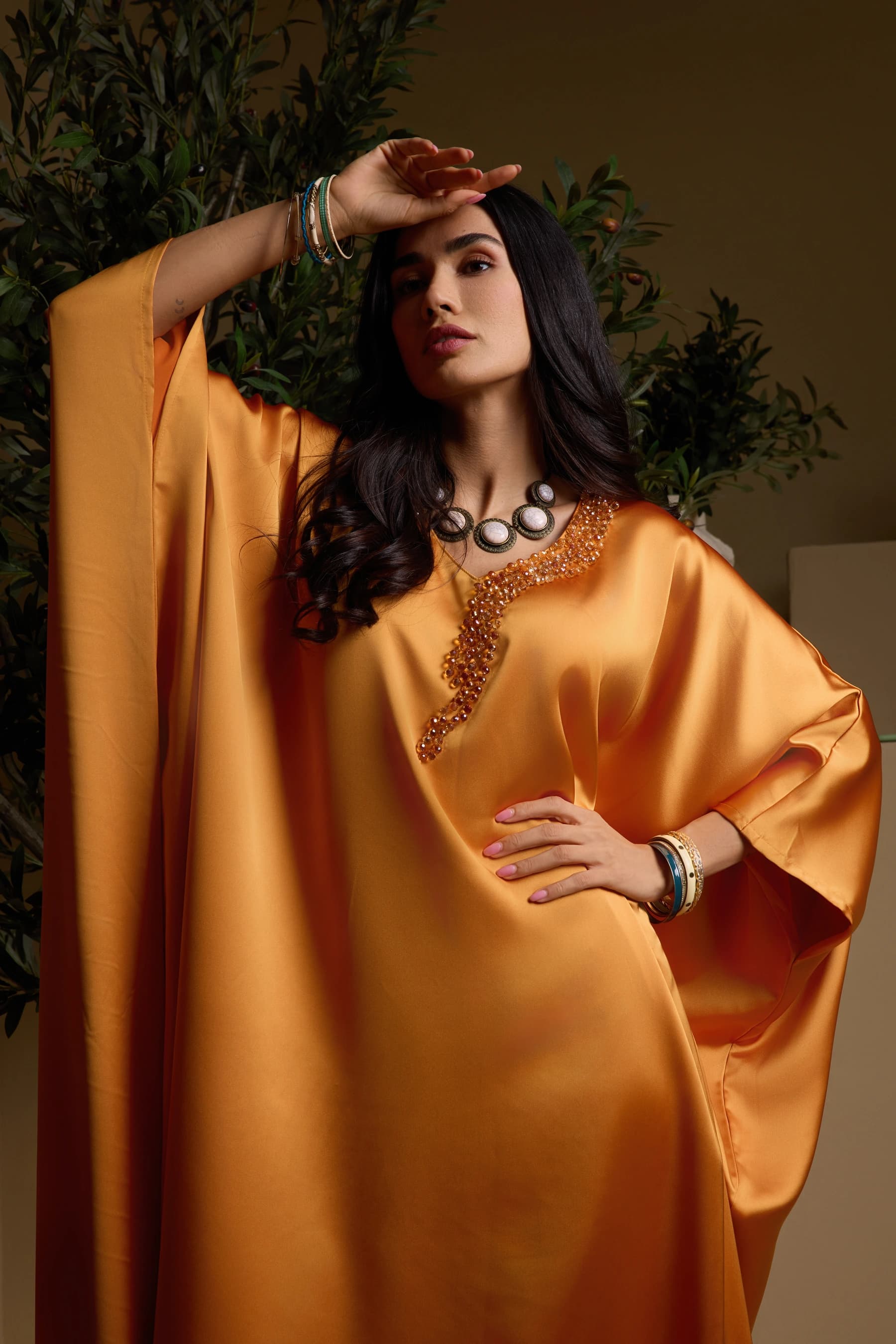
In abaya fabric photography, the cloth decides the light. Matte nida and crepe need a soft source from the side to show their shape. Silk and satin reflect the light, so the source has to be large and carefully placed. Chiffon and georgette need light from behind, and linen and jersey need creases and pull lines handled before the first frame.
The abaya photography page gives each fabric a line or two. This guide adds the angles, the usual faults, and how to steam and retouch each one. The fabrics are defined in the modest fashion glossary.
Matte, sheen and sheer: how fabric handles light
Matte fabrics scatter light. Their brightness depends on the angle at which it strikes them and barely changes as the camera moves, so a matte abaya's shape comes from the light's direction.
Glossy fabrics reflect it. Silk and satin show a highlight only where the angle from light to cloth matches the angle from cloth to lens, so a small move of the light sends the highlight across the panel.
Sheer fabrics let it through, and the background, the inner dress or the body becomes part of how they look.
When a piece combines two, such as nida with satin trim, light for the fabric that fails first: raise the exposure for the nida and the trim clips, so set it by the sheen and lift the matte panels with a reflector.
| Fabric | How it takes light | Light that suits it | Watch for |
|---|---|---|---|
| Nida | Matte, opaque, almost no sheen | Large soft source from the side | Flat panels, iron shine |
| Crepe | Fine pebbled grain | Large source at about 45 degrees | Static cling, drag lines from clips |
| Silk and satin | Sheen that moves with the angle | Largest soft source, close in | Hard highlight lines, creases |
| Chiffon and georgette | Sheer, shows what is behind | Front key plus a light behind | Show-through |
| Linen | Matte, uneven slub weave | Side light | Creases within minutes |
| Jersey | Smooth, stretches | Softer, more frontal light | Pull lines, hanger bumps |
| Jacquard and embossed | Pattern shows at some angles only | A light moved until it appears | Pattern vanishing |
Nida and crepe: matte fabrics that need direction
Nida
Nida has almost no sheen, so its shape comes from shadow. A large soft source 60 to 90 degrees from the camera, a little above shoulder height, turns each fold into a gradient. Fill with a white reflector rather than a second head, so the shadow side keeps detail without going flat.
The first fault side light finds on nida is iron shine: glossy patches a hot iron leaves on polyester, easy to miss on the rail and slow to retouch. Steam nida, pressing stubborn creases only from the reverse through a cloth. Black nida adds an exposure problem, covered in lighting a black abaya.
Crepe
Crepe's pebbled surface reads as texture under a soft key and turns gritty under a hard one, so give it a large source at about 45 degrees. Silk crepe has a soft lustre: treat it as halfway to satin.
Lighter crepes cling, because air conditioning dries the air and static pulls the fabric onto the inner layer. Anti-static spray inside the garment, tested on a seam, settles it. Clips at the back pull drag lines that show from the front, so clip along the seams and check the profile.
Silk and satin: placing the sheen
On satin, the highlight is what the customer reads as quality, and it moves with the light, the model and the camera. With the modelling light on, watch from the camera and move the light until the sheen runs down the shoulder and sleeve, clear of the centre of the front panel.
Source size sets how intense the sheen is. Pulling a light back to soften it does the opposite: the highlight shrinks into a hard line while the panel darkens. Bring the largest soft source close instead, or bounce a head into a big white reflector, and the satin mirrors a broad, even surface.
A polarising filter on the lens trims side-lit sheen. Stop turning it when the hot edge goes, or the satin starts to look like crepe.
The sheen also follows the weave, so a bias-cut front and a straight-grain sleeve can photograph lighter and darker under one light. Even that out in retouching rather than chasing it on set.
Satin reflects the room too: warm walls warm the highlights, and the brass lanterns in the Heritage room's Lantern Corner can show as gold points along the folds, good in a campaign frame, distracting on a product page. Highlights also pale the dye; for the shade itself, see shooting coloured and pastel abayas.
Chiffon and georgette: light through the layers
A light behind a sheer abaya does two jobs: it separates the layers, and it shows whatever they cover.
Watch the second job closely. A backlight through a single layer can reveal more of the body's outline or the inner dress than the brand intends, and more than the eye notices on set. Aim it at the sleeves, hem and trailing panels, keep it off the torso, and check each setup at full size on a laptop.
Pale chiffon glows against a dark background, which is why the Dark Set in the Concrete room, a low-key zone, suits backlit sheers. Dark chiffon reads better against a lighter mid-tone wall, where each added layer shows as a deeper shade.
Georgette's grainy surface is more matte and slightly more opaque than chiffon, so it takes a front key more easily. Both sell in motion: a fan on low lifts the hem, a short flash duration freezes it, and a short clip of the hem moving belongs on the same set.
Linen and jersey: creases and pull lines
Linen
Linen's uneven slub weave shows well under side light. Its problem is time: it creases at the elbows, back and lap within minutes of wear, so shoot standing frames first and seated ones last, steaming between setups. Agree with the brand how much creasing is acceptable: soft folds suit a lifestyle frame, while a listing frame should hang smooth.
Jersey
Jersey's shape comes from its drape. Hard side light picks out every pull line and the seams of whatever is worn underneath, so use a larger, more frontal source. Jersey also stretches on hangers, so keep it folded or on padded hangers until needed, and steam it without pulling.
Jacquard, embossed and crinkled fabrics: finding the angle
A jacquard pattern is woven from yarns that reflect differently, so it shows only where the shiny yarns catch the light. Tone-on-tone jacquard can vanish from one light position and stand out from another a metre away. Find the angle with the modelling light, watching from the camera, then fix the light and the model's mark for the whole range.
Embossed fabrics need light skimming across the relief, and an iron can flatten it for good. Crinkled and plissé finishes can soften under heavy steam, so ask the brand first. Shoot the fabric-in-hand frame from the abaya shot list at the angle you found.
Steaming and retouching, fabric by fabric
| Fabric | Steaming and handling | Retouching |
|---|---|---|
| Nida | Steam; press only from the reverse | Lint and crease lines out, grain kept |
| Crepe | Steam; anti-static spray inside | Drag lines out, grain kept |
| Silk and satin | Steam from the reverse, steamer fully heated | Crease highlights smoothed, gradients kept |
| Chiffon and georgette | Low steam, never a hot iron | Sheer areas left translucent in cut-outs |
| Linen | High heat, re-steam between setups | Sharp creases out, slubs kept |
| Jersey | Folded or on padded hangers, light steam | Pull lines and hanger bumps out |
| Jacquard and embossed | Steam from the reverse, no pressing | Local contrast at most, no painted pattern |
Tell the retoucher which panels are satin, sheer or textured, because smoothing that suits nida wipes out a jacquard.
Planning the shoot around the fabric list
Sort the rail by fabric rather than style number, with one setup each for matte, satin and sheer pieces, so the light changes three times instead of with every garment.
Every room booking includes Profoto flash, Aputure continuous lighting, modifiers, stands and support, and the hourly rates for every room start from AED 320 + VAT per hour in Sand and Beige and from AED 350 + VAT in Concrete and Heritage. Confirm any modifier the plan relies on, such as a long stripbox or a grid, when booking.
If the studio is shooting, the fashion and abaya production packages run from Start (from AED 1,500 + VAT) to Golden (from AED 5,900 + VAT), and Start and All-In include a steaming assistant. If you rent the room with your own team, confirm the steamer when booking.
Send the fabric list on WhatsApp, +971 50 503 9936: each style with its fabric as the supplier names it, a daylight phone photo of each fabric, and which pieces are sheer, layered, textured or trimmed in satin. The studio in Al Quoz Industrial Area 3 is open 09:00 to 21:00, seven days a week.
Frequently asked questions
- How do you photograph a satin abaya without hot spots?
- Use the largest soft source available and bring it close, since a small or distant light turns the sheen into a hard, clipped line. With the modelling lamp on, move the light until the sheen runs down the shoulder and sleeve instead of across the front. Expose so the brightest sheen sits just under clipping, and steam out every crease first.
- Why does a chiffon abaya look see-through in photos?
- Light from behind passes through chiffon and georgette, and a flash frame often shows more than anyone noticed on set, including the outline of the inner dress or the body. Keep any backlight on the sleeves and hem and off the torso, style an opaque inner layer, and check every setup at full size on a screen.
- Should you iron or steam an abaya before a photoshoot?
- Steam it. A hot iron can leave shiny patches on polyester nida and crepe and marks on satin, and studio side light picks them up. Steam from the reverse with the steamer fully heated so it does not spit onto silk, and let each piece hang a few minutes before it is worn. Linen tolerates an iron but creases again once the model sits.
- Which abaya fabric is the easiest to photograph?
- Matte, opaque fabrics such as nida and crepe in a mid or light shade are the most forgiving: they show their shape under almost any soft side light, though black versions need careful exposure. Satin takes longer because every highlight must be placed, sheers need a second light and a show-through check, and jacquard needs testing to find its angle.
Written by
Kate
Founder and Creative Director, BlueSky Studio
Kate founded BlueSky Studio, registered the company and opened the Al Quoz Industrial Area 3 location, and designed the six permanent sets the studio shoots in. She sets the rates quoted in these guides and works on the floor with the teams who book them, so the timings, the equipment and the numbers here come from the rooms rather than from a content brief.
Keep reading
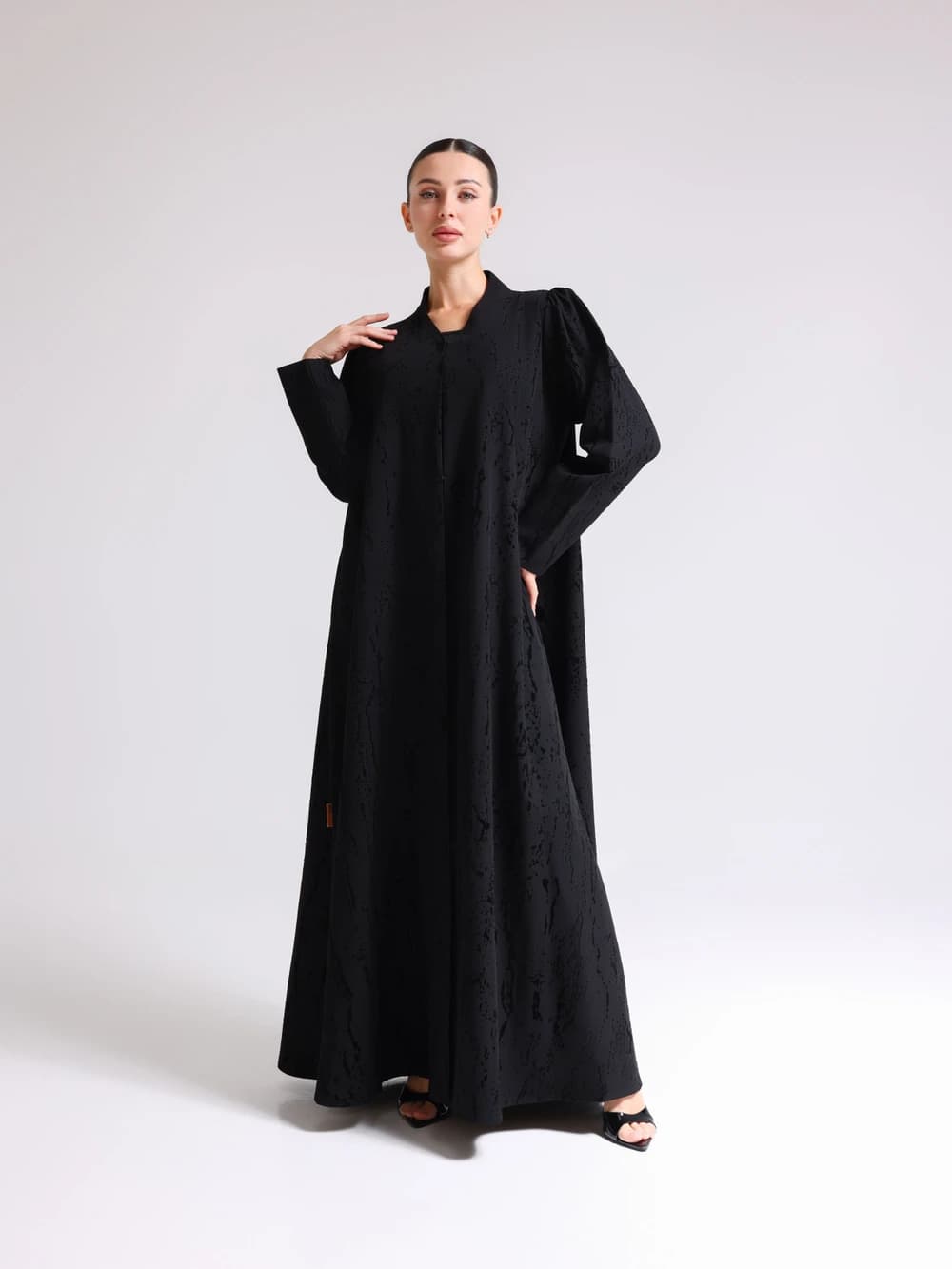
How to Photograph a Black Abaya So the Weave and Seams Still Show
Black abaya photography that keeps the weave, seams and stones: why the meter misreads black, where the lights go, black on white, and an edit that stays black.
· 9 min read
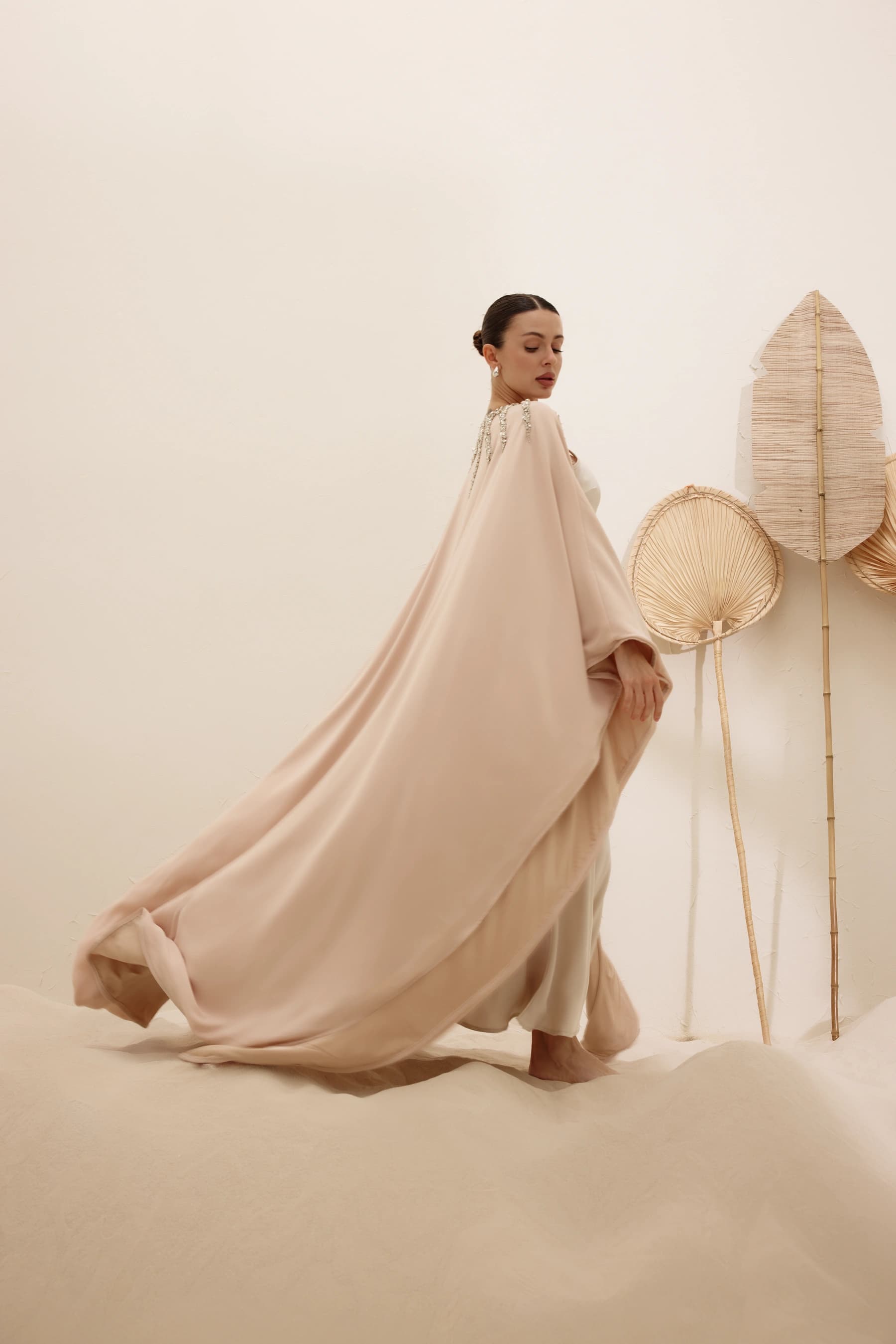
Beyond Black: Shooting Coloured and Pastel Abaya Collections
In coloured abaya photography, the shade on screen has to match the garment in the box. Grey cards, steady flash, the right wall and retouching to the card.
· 7 min read
How Many Photos Does One Abaya Listing Actually Need?
The nine frames an abaya shot list needs, realistic minutes per SKU, and worked examples at 15, 40 and 100 pieces so you can size the shoot before you book it.
· 14 min read
Six themed rooms in Al Quoz, lighting included, from AED 320 + VAT per hour.