

A Modest Fashion Glossary for Brands Briefing a Shoot
Kate · Founder and Creative Director, BlueSky Studio
Updated 13 min read
A shoot can go wrong before anybody picks up a camera. Sometimes it starts with one word in the brief. The brand writes “hijab” when it actually has a specific scarf style in mind. Styling orders one garment, casting prepares for another, and by the time everyone realises they were using the same word to mean different things, the rail is already in the studio.
That is exactly why a modest fashion glossary belongs near the top of the brief. This one is written for brands, producers, stylists and marketers working on modest-fashion shoots in the UAE. It focuses on the language that affects what gets cast, sourced, styled and photographed.
Usage is not identical across the Gulf, the wider Arab world or individual brands. Where terminology can shift, confirm the wording with the client or a native speaker before the brief is circulated. The goal is simple: make sure everybody on the production means the same thing when they use the same word.
For the actual shoot setup, see the guide to abaya photography in a Dubai studio.
Garments
Abaya
An abaya is a loose outer garment worn over other clothing. In Gulf fashion it is commonly full-length, and although black remains strongly associated with the category, contemporary collections also use colour, embroidery, texture and different cuts. From a production point of view, the important word is outer.
If the abaya is open, the clothing underneath may appear in the photograph. That means the inner layer needs to be styled just as deliberately as the abaya itself. Do not wait until the model is dressed to ask what is supposed to be underneath.
Jalabiya
In this brief, jalabiya refers to a loose full-length dress worn as the outfit itself rather than as an outer layer. That changes the styling immediately. An abaya may need an inner look. A jalabiya generally does not play the same layering role. The term and spelling can vary regionally, so this is one to confirm with the client or a native speaker before publication and before a regional brief goes to casting.
Kaftan
Kaftan is a broader fashion term for a loose robe or dress and is used across a much wider geography than the UAE alone. That breadth is exactly why the word can create confusion in a production brief. If the brand has a very specific Gulf garment in mind, do not assume that “kaftan” communicates all of the construction, layering and styling details automatically.
Describe the garment as well as naming it.
Kandora or kandura
The brief uses kandora / kandura for the men's ankle-length robe worn in the UAE. For shoot planning, the cut matters as much as the word. Collar treatment, neckline detail and anything worn with it affect how tightly the portrait can be cropped and how the garment needs to be pressed.
The preferred spelling and UAE-specific construction details should be confirmed with a native speaker before publication.
Thobe and dishdasha
These are names used for related garments in other Gulf markets, with terminology changing by country. For a campaign running in more than one GCC market, the word in the brief can signal which audience the creative is intended for. That is not a detail to guess.
If the campaign crosses borders, have the client confirm the country-specific terminology in writing.
Bisht
A bisht is worn over the main garment for formal or ceremonial styling and is often finished with metallic or decorative trim. For photography, remember that it is a layer. If the bisht is the hero piece, the garment underneath still needs to be steamed, styled and framed properly because it will remain visible.
Metallic trim also behaves differently under light from a matte fabric, so the lighting plan may need to account for both.
Farasha
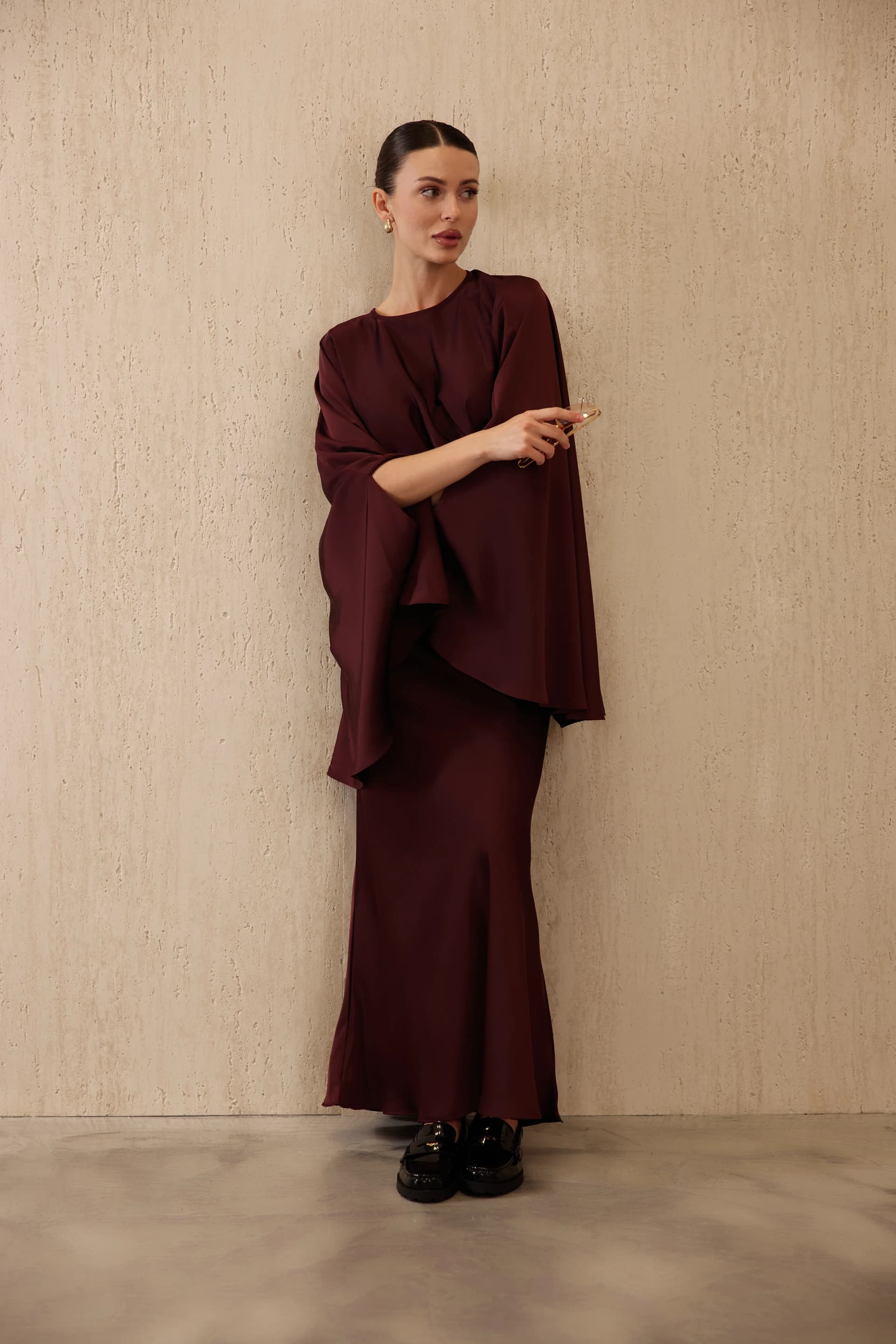
Farasha is used in the source brief for a wide, flared abaya cut associated with a butterfly-like silhouette. The main production point is the shape. A garment chosen because of its width and movement should not be photographed only in a tight crop. Give it enough floor space for the silhouette to open.
Confirm the preferred terminology and spelling with the client or native speaker before using the term publicly. If there is any uncertainty around a garment name, add three practical details to the brief: Is it an outer layer or the main outfit? Does it open at the front?
What is the approximate length and silhouette? Those details often prevent more production mistakes than the label alone.
Head coverings
This is the section where vague wording causes the most confusion.
Hijab
The word hijab can carry more than one meaning. It can refer broadly to modest covering in an Islamic context, while in everyday English it is also commonly used for a headscarf. Because of that, it often becomes a catch-all in creative briefs. If the brand wants a specific scarf or face covering, name that item rather than relying on “hijab” to communicate the entire styling direction.
Shayla
In the source brief, shayla refers to a long rectangular scarf worn over the head and draped or wrapped, with the ends arranged around the shoulders. For a UAE campaign, this may be much closer to what the creative team actually means when it casually writes “hijab” in the moodboard.
If the wrap style matters, include a reference photograph. A single word is not enough to communicate how the scarf should sit around the forehead, jaw and shoulders.
Niqab
A niqab is a face covering that leaves the eyes visible and is worn together with a head covering. From a production perspective, this is not a styling variation of a headscarf. It changes casting, framing and what part of the face appears in the final image.
It therefore belongs in the brief before casting, not as a last-minute request on set.
Gishwa
The source describes gishwa as a sheer face veil, including coverage over the eyes. Terminology and spelling need native-speaker confirmation before this is used in published brand content or a client-facing vocabulary sheet.
Tarha
Tarha is another term a team may encounter for a headscarf, with usage varying by region. Before using it in a UAE-specific brief, confirm that it is the term the client and intended audience actually use.
Ghutra
The source uses ghutra for the men's square headcloth, folded and worn over the head. If the campaign is highly market-specific, include a visual reference as well as the word because colour, fold and styling can all change the final look.
Keffiyeh and shemagh
These are wider regional terms that may overlap with or sit alongside ghutra depending on context. Because the names carry different geographic associations, regional campaigns should not treat them as interchangeable without client confirmation.
Agal
The source uses agal for the black cord worn over the ghutra to hold it in place. Confirm the preferred spelling before publication. The larger point is more important than any one definition: hijab, shayla and niqab should not be used as interchangeable words in a production brief.
If the styling matters to the campaign, be specific.
Modest-fashion set etiquette
Vocabulary is only one part of getting the brief right. The way the styling is handled on set matters too. Ask the model how she normally wraps or arranges her head covering and allow her to do it herself where appropriate. Do not reach in and adjust a scarf or covering without asking first.
If hair, ears or neck may appear in any of the planned frames, agree that before shoot day. Do not make that decision for the first time while the model is standing in front of the crew. Put those points into the brief together with the visual references.
For arrival, changing, garments and other practical details, use the studio booking checklist.
Fabrics
For modest-fashion photography, fabric can change the lighting plan more than colour. A black matte garment and a black satin garment can require very different setups.
Nida
The source brief describes nida as a heavier matte crepe widely used for Gulf abayas. From a photography perspective, the useful characteristic is the finish. Matte fabric absorbs more of the light instead of throwing strong reflections back toward the camera. It tends to keep the garment shape readable and is generally easier to light consistently.
Trade naming can vary between suppliers and brands, so confirm the term the client actually uses internally.
Kora
Kora appears in the source as another cloth name used in the abaya trade. Because supplier terminology may not match broader dictionary use, this should be verified with the brand or fabric supplier before publishing it as a fixed definition.
Crepe and silk crepe
Crepe generally gives a softer drape. Silkier versions introduce more sheen, which means the shoulder and sleeve can pick up a brighter highlight depending on the angle of the light. If the campaign wants a soft, even look, the photographer may use a larger or more diffused source.
Chiffon
Chiffon is sheer and light, so the main challenge is keeping the edge and layers visible. Against a background that is too similar in brightness, the fabric can start to disappear. A darker or contrasting background and separation light can help show the outline. This is also why a chiffon shoot may take longer than the shot list suggests: the garment often needs more careful lighting and movement.
Jersey
Jersey follows the body more closely than a structured abaya fabric. That changes posing. Where a heavier material creates its own silhouette, jersey responds more directly to the body underneath, so fit and styling become more visible.
Satin and silk
High-shine fabrics reflect the source much more strongly. Sometimes that bright highlight is part of the intended look. Sometimes it is exactly what the photographer is trying to avoid. The answer depends on the campaign: either soften the light and make the reflection broader, or use a more deliberate hard source and make the shine intentional.
The guide to lighting nida, crepe and chiffon covers those material differences in more detail.
Cut, construction and finishing
Open abaya
An open abaya exposes the outfit underneath. That means the inner styling needs to be sourced, fitted and approved before shoot day. You are effectively styling two garments, not one.
Closed abaya
A closed abaya works more as a single silhouette. If the shape is the selling point, give it enough room in the frame rather than cropping everything into a waist-up image.
Butterfly and kimono sleeves
Wide sleeves need space. If the brief includes movement, make sure the studio and framing allow the sleeve to open properly. A fan or simple movement direction can help if the campaign needs to show drape.
Farasha cut
The source treats farasha as a wide flared cut. If that width is the product feature, photograph it full length at least once. There is little value in selling the silhouette and then cropping it out.
Flared and A-line
These shapes widen toward the hem. They tend to read more clearly standing than sitting because a seated pose compresses much of the lower silhouette. Decide early whether the campaign needs full-length standing frames.
Front closures
Magnetic closures, hidden press studs and ties may look like small construction details, but they affect shoot speed. A closure that resets in seconds is easier across repeated frames than something the stylist has to rebuild every time the model moves. If the closure is visible or important to the product, name it in the brief.
Hand embroidery
Raised embroidery needs light from an angle if you want to show depth. Very flat frontal lighting can make expensive handwork look almost printed. If embroidery is one of the reasons the garment costs what it does, give the photographer time to light it accordingly.
Sadu
The source describes sadu as a traditional Bedouin geometric weave used as trim or panel detail. The spelling and appropriate commercial usage should be confirmed with a native speaker or the client before publication.
Zari
The source uses zari for metallic thread work. Metallic threads catch the light in a completely different way from matte cloth, so the photographer needs control over the angle of the source. Terminology should be confirmed before publication.
Crystal and bead work
Beads and crystals need highlights if you want them to sparkle. An extremely flat soft setup may technically expose the garment perfectly while making the embellishment look lifeless. If the client approved the piece under bright showroom spots, include sparkle references in the moodboard so the photographer understands what the brand expects.
Laser-cut detail
Cut-through detailing needs contrast. If the background or layer underneath is too close in colour, the pattern disappears. A contrasting inner garment or some light passing behind the cut can make the construction visible.
Why one wrong word can change the whole shoot
A vocabulary mistake rarely stays on the page. It travels. A casting brief uses one head-covering term when the brand means another, so the talent arrives prepared for the wrong styling. The styling order says jalabiya when the campaign actually needs an open abaya, so nobody sources the inner layer.
The lighting plan assumes matte fabric, then a rail of sheer chiffon arrives and the photographer spends the first part of the booking rebuilding the setup. That is why terminology should be signed off before the call sheet goes out. Have the brand or a native speaker review the key words in writing.
For bigger regional campaigns, record who approved the vocabulary so there is one reference point if questions come up later.
A brand that posts every week rather than shooting once a season needs that reference every month: the same name for the same piece in every post, Reel and product description. That is part of the work behind social media for modest fashion brands: the plan, the shoot and the posting from one studio.
Choosing the room for a modest-fashion shoot
The terminology tells the team what is being photographed. The room decides what happens around it. The Heritage room's arches and traditional niche give the strongest architectural setting for abaya, Ramadan and more traditional fashion concepts. Heritage includes the Arch Zone, Lantern Corner, Carpet Area and Traditional Niche.
Sand works better for a softer contemporary editorial direction with its Desert Wall and Earth Tones Corner. Lobby gives more open floor space for movement and full-length silhouettes and also brings in a lot of natural light. If the brief includes both space and crew, see the fashion and abaya production packages.
Frequently asked questions
- What is the difference between a hijab, a shayla and a niqab?
- In this glossary, hijab can refer broadly to modest covering and is also commonly used in English for a headscarf. A shayla is described as a long rectangular scarf worn and wrapped around the head and shoulders. A niqab is a face covering that leaves the eyes visible. For a production brief, do not rely on the terms alone. Include a visual reference showing exactly how the brand wants the covering styled.
- What is the difference between an abaya and a jalabiya?
- An abaya is treated here as an outer garment worn over clothing. A jalabiya is described as a loose full-length dress worn as the outfit itself. That difference changes what the stylist needs to source underneath and how the garment is photographed. Regional usage of “jalabiya” should be confirmed before publication.
- What is a kandora and what is it called elsewhere?
- The source brief uses kandora or kandura for the men's ankle-length robe worn in the UAE. Related garments may be referred to as thobe or dishdasha in other Gulf markets. Country-specific terminology, preferred spelling and construction details should be verified with a native speaker before a regional campaign is briefed.
- What fabric are most abayas made from?
- Nida, a matte crepe, is the fabric most commonly used for Gulf abayas. From a photography standpoint its matte finish makes it easier to control under studio lighting than fabrics with a strong sheen. Other materials such as chiffon, silk crepe and satin behave very differently and need different light, so the fabric name belongs in the production brief alongside the garment. Have the client confirm garment names and regional spellings before the brief goes to casting.
Written by
Kate
Founder and Creative Director, BlueSky Studio
Kate founded BlueSky Studio, registered the company and opened the Al Quoz Industrial Area 3 location, and designed the six permanent sets the studio shoots in. She sets the rates quoted in these guides and works on the floor with the teams who book them, so the timings, the equipment and the numbers here come from the rooms rather than from a content brief.
Keep reading
How to Photograph a Black Abaya So the Weave and Seams Still Show
Black abaya photography that keeps the weave, seams and stones: why the meter misreads black, where the lights go, black on white, and an edit that stays black.
· 9 min read
Beyond Black: Shooting Coloured and Pastel Abaya Collections
In coloured abaya photography, the shade on screen has to match the garment in the box. Grey cards, steady flash, the right wall and retouching to the card.
· 7 min read
How Many Photos Does One Abaya Listing Actually Need?
The nine frames an abaya shot list needs, realistic minutes per SKU, and worked examples at 15, 40 and 100 pieces so you can size the shoot before you book it.
· 14 min read
Six themed rooms in Al Quoz, lighting included, from AED 320 + VAT per hour.