

What to Wear for a Studio Photoshoot in Dubai
Kate · Founder and Creative Director, BlueSky Studio
8 min read
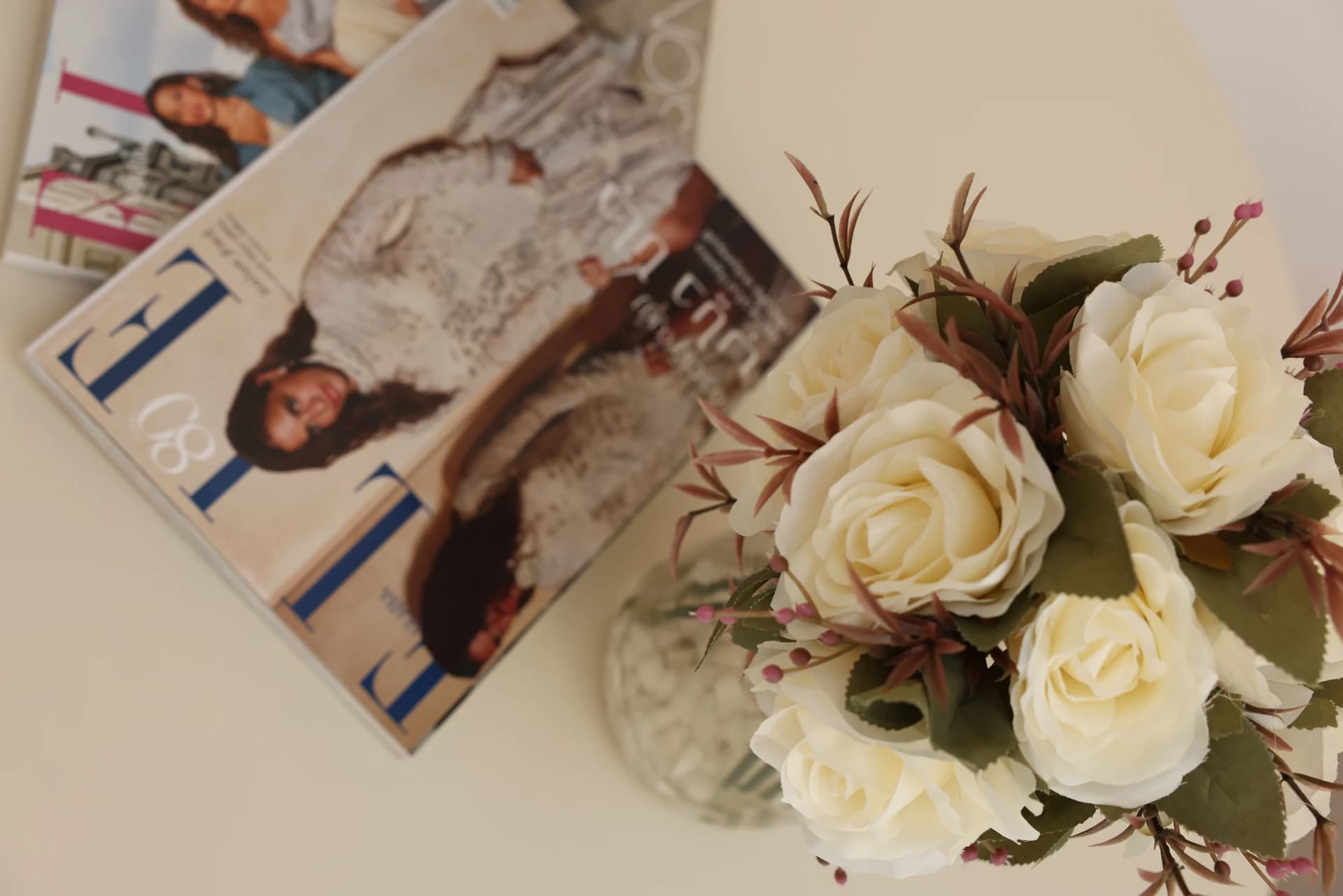
Most wardrobe panic happens the night before a shoot. Clothes end up on the bed, three pairs of shoes come out, then somebody starts wondering whether beige will look elegant or simply disappear into the wall. There is an easier way to decide what to wear for a studio photoshoot: start with the room.
A grey shirt against raw concrete does not behave like the same shirt against a pale neutral wall. Black can look sharp in one set and lose all its shape in another. Even white, which people often assume is the safest option, depends heavily on the background and the direction of the light.
At BlueSky Studio in Al Quoz, the six themed studio rooms for hire have very different palettes, so the wardrobe should follow the set rather than the other way around.
Pick the room first, then choose the clothes
There are six themed shooting rooms. Beige is soft and neutral, with a Main Zone, Lounge Area, Accent Wall and Natural Light Corner. Sand has a warmer look: Desert Wall, Earth Tones Corner, Minimalist Set and Warm Light Zone. Hotel feels like an actual interior, with a Bedroom Set, Bathroom Zone, Lounge Area and Balcony Set.
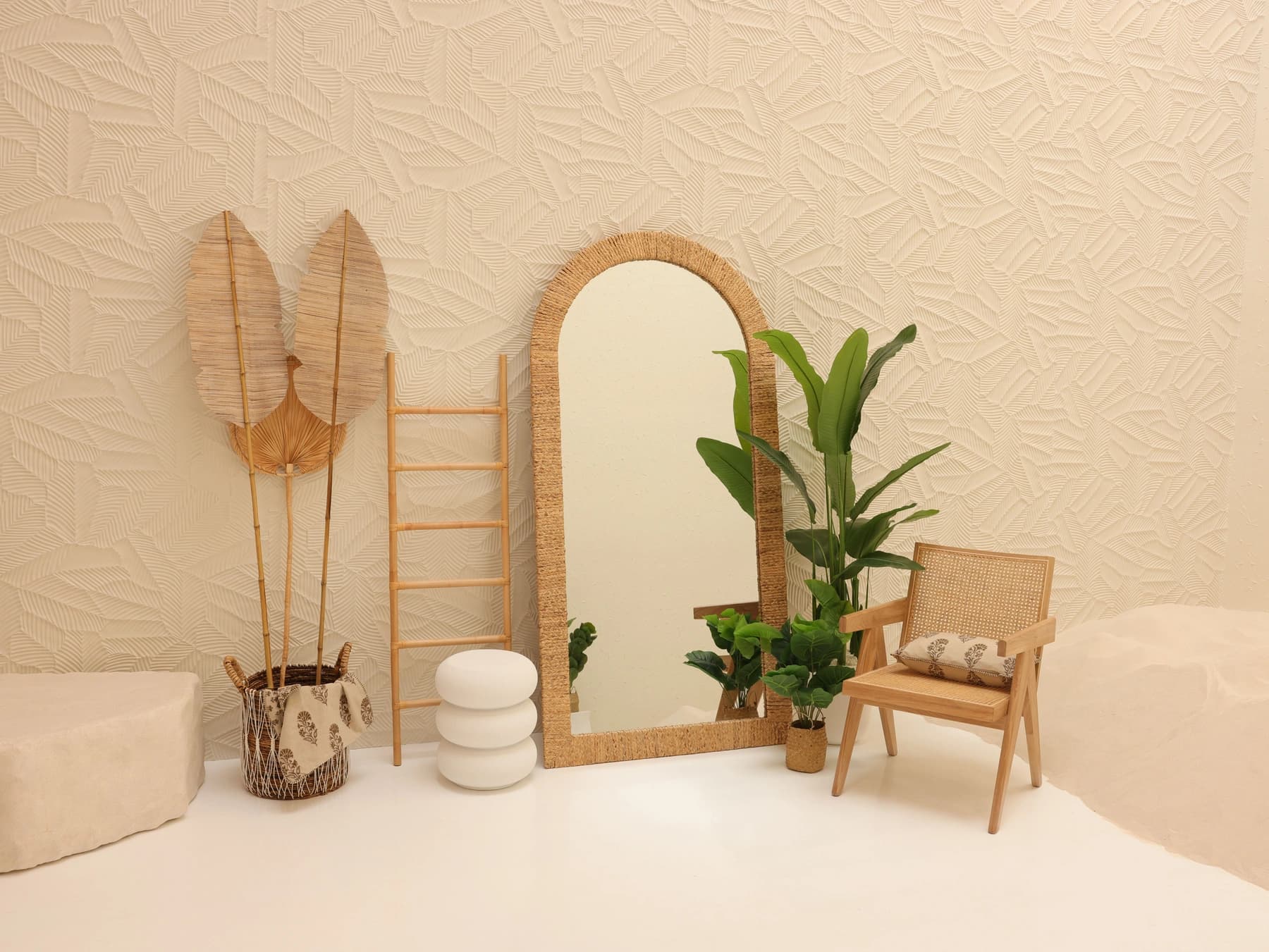
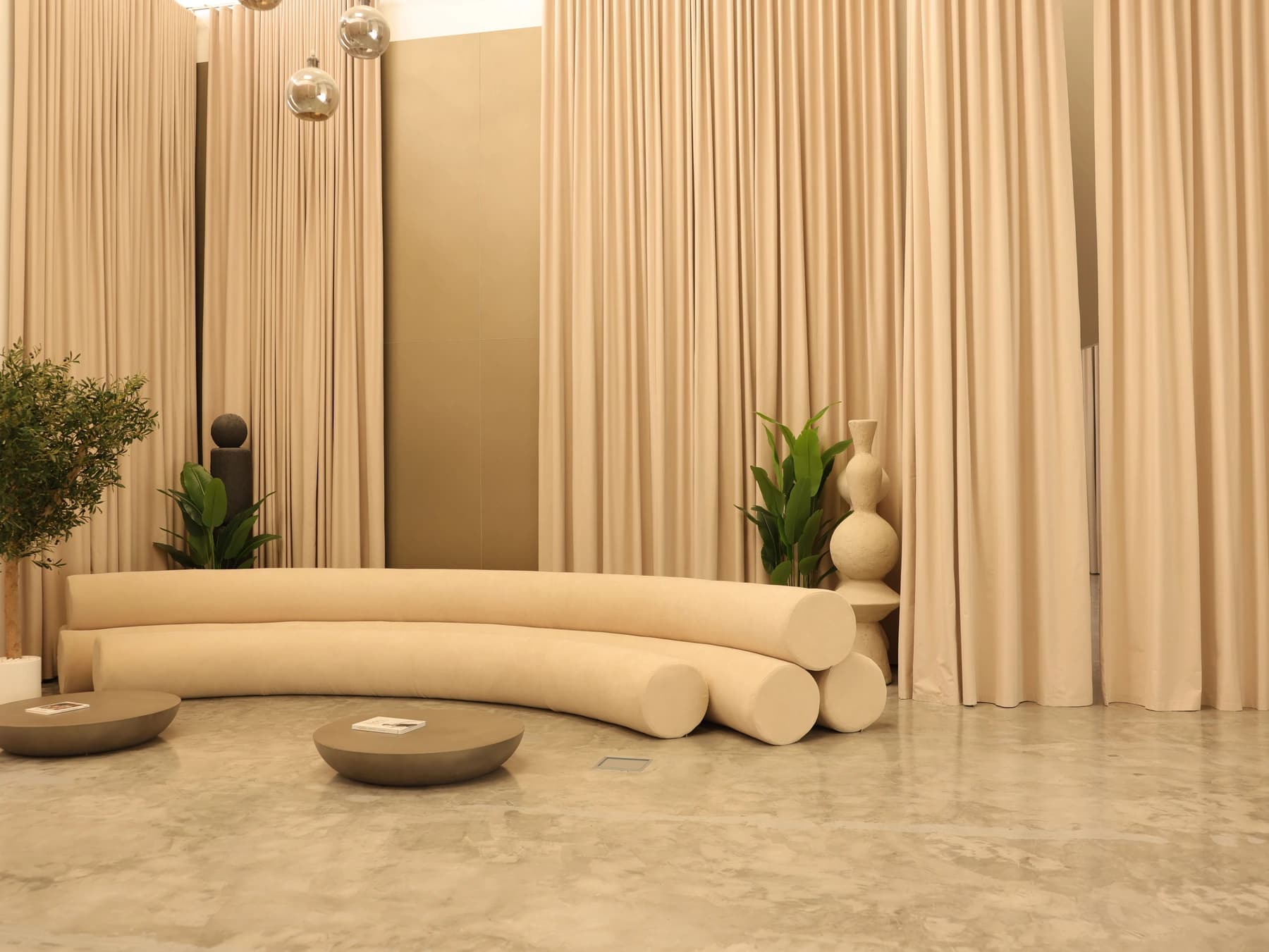
Concrete is darker and more industrial: Raw Wall, Industrial Corner, Dark Set and Open Space. Heritage brings warmer architecture into the frame with arches, lanterns, carpets and a Traditional Niche. Lobby is brighter and more open, with a Mirror Zone, Curtain Backdrop, Plant Corner and a larger floor area.
One practical detail matters here: when you book a room, you can use all the zones inside it. So you are rarely dressing for one single background. In Hotel, the first photographs might be taken in the bedroom and the next ones in the lounge or balcony setup. Unless you are planning an outfit change between every zone, the same clothes need to work across the room.
That is why contrast matters more than trying to perfectly match the set.
Beige: stay neutral, but give the outfit an edge
Beige-on-beige sounds good until the camera comes out. A camel jacket, cream trousers and a pale wall may look beautifully tonal in person. On camera, however, the jacket and background can land at almost the same brightness. The shoulder line becomes less defined and the clothes begin to blend into the room.
You do not need to abandon neutrals. Move the outfit slightly away from the wall instead. Charcoal knitwear, dark denim, olive, chocolate brown and deeper taupe all give enough separation while keeping the same understated mood. Clean white works too, particularly in the Beige room's natural light corner.
That corner gets directional daylight, which gives a white shirt or dress more shape against the pale surroundings. The same white look under flatter lighting in the centre of the room may need more care because the tonal difference between clothing and background becomes smaller.
If you want a very light outfit in Beige, texture helps as well. Linen, knitwear, matte crepe or a structured jacket usually reads more clearly than a completely flat cream fabric against a similarly coloured wall.
Sand: let the room do some of the styling
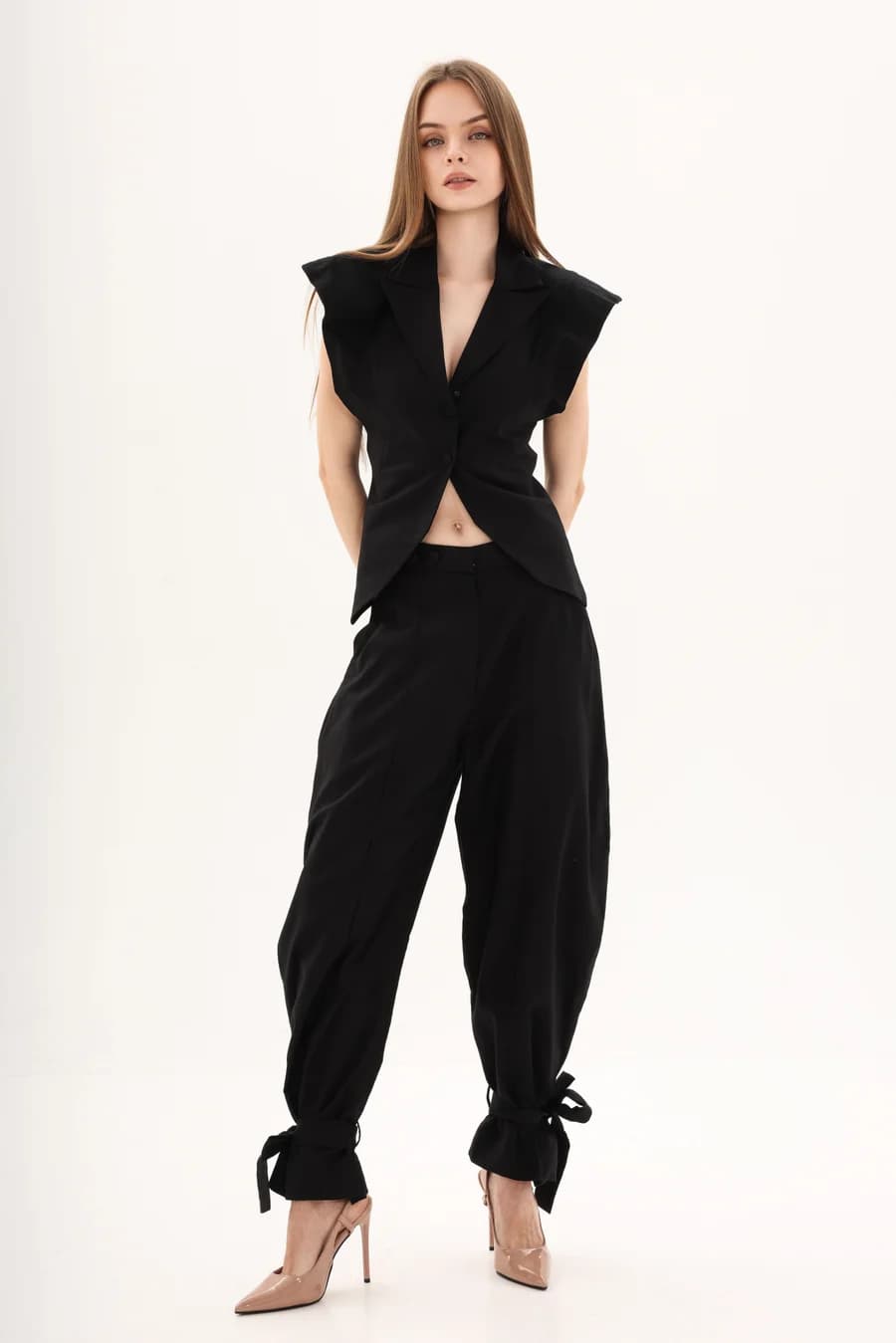
Sand is easier to dress for because the background already contains texture. The Desert Wall and Earth Tones Corner bring grain, shadow and warm colour into the frame, which means the outfit can stay relatively simple. Rust, olive, cream, deep brown and muted earthy colours all sit comfortably here.
Three uncomplicated options would be: a long cream dress in a matte fabric; a rust or terracotta shirt with dark wide-leg trousers; a deep brown suit with a clean white top underneath. None of those outfits has to compete with the room. And that is usually the better approach in Sand. If the wall already has texture and colour, the clothes do not also need a small print, complicated accessories and five different materials fighting for attention.
Concrete: black actually works here
The Concrete room is one of the strongest places for an all-black outfit. The Raw Wall and Industrial Corner sit in the grey range and have enough texture to separate black clothing from the background. Black jeans, boots and a structured jacket can still read as three individual pieces rather than turning into one dark shape.
Charcoal, denim, leather and sharper tailoring work well for the same reason. The Dark Set is the exception. Black against a very dark background needs lighting that separates the subject from the wall. Usually that means giving the shoulders or hair some light from behind or from the side.
If one of your planned looks is completely black, mention it to the photographer before changing into it. It is much easier to set the light first than to discover afterwards that the outline has disappeared. Concrete also handles stronger silhouettes better than the softer rooms. Oversized jackets, structured shoulders, boots and heavier fabrics make sense here.
Heritage: this is where richer colours belong
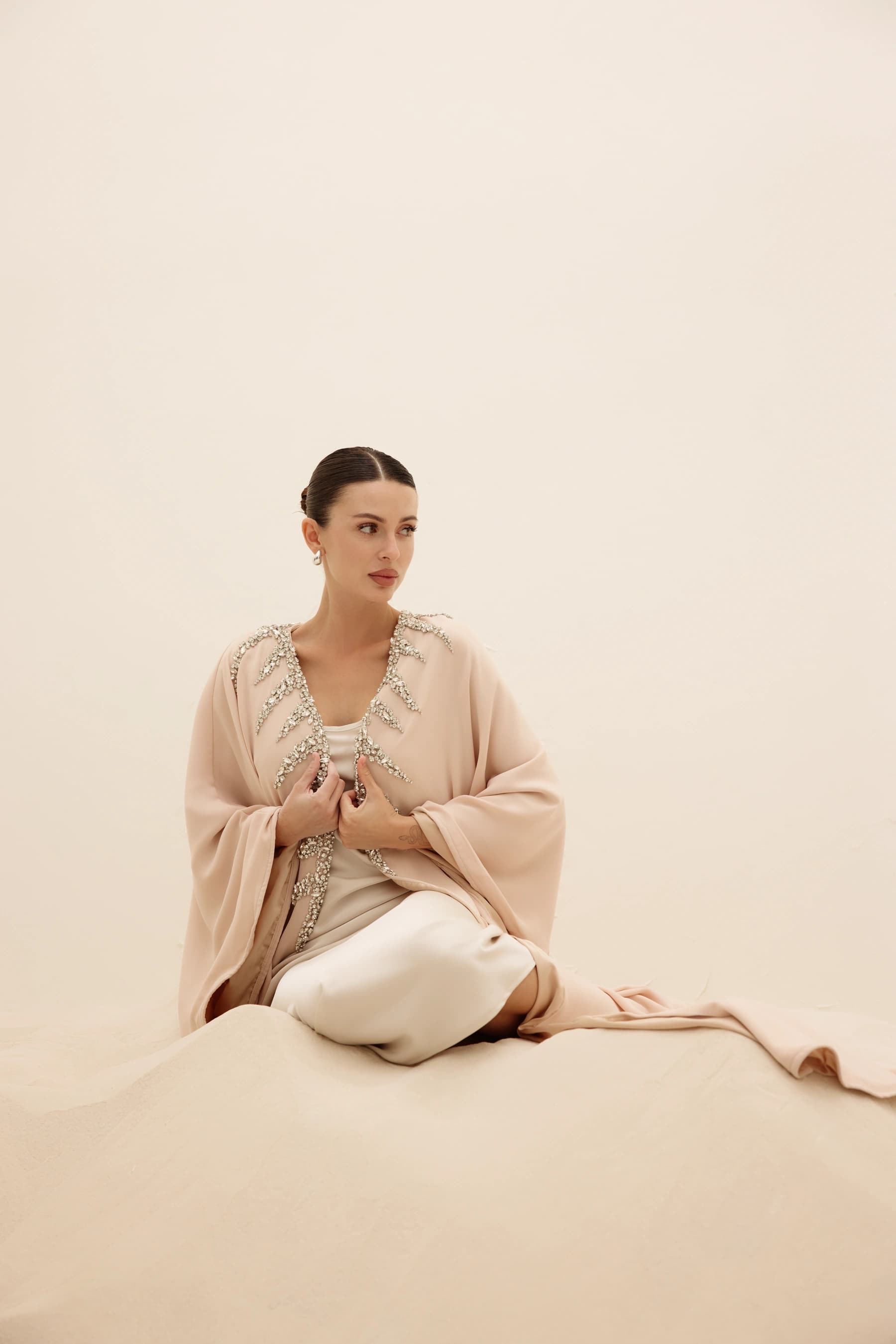
Heritage has its own visual language. The arches, lanterns and warmer tones already make the room feel quite specific, so clothing that is too cool or too minimal can look disconnected from the set. Cream, gold, burgundy, deep green, warm brown and richer embroidery all work naturally.
This is also the room where fabric detail is worth showing. Metallic thread, embroidery, beadwork and heavier traditional garments react well to the warmer light and textured surroundings. For an abaya, kaftan or another piece where craftsmanship is part of the product, that can be far more useful than photographing the same garment against a completely plain wall.
Cool grey can be trickier here. A suit that looks crisp in neutral daylight may feel flatter once it is surrounded by warm architectural tones. Patterns are fine, but very tight ones deserve caution. Small checks and narrow repeating stripes can create moiré on camera, where the pattern seems to ripple or shimmer in the image.
Large prints are generally much easier to photograph.
Hotel: choose something that works in more than one corner
Hotel is probably the easiest room to imagine clothing in because it looks like a finished interior rather than a photographic background. A suit, evening dress, robe, personal-brand outfit or clean casual look can all work. The main thing to remember is that Hotel contains several different sets.
An outfit that looks perfect on the bedroom set should ideally still make sense if the photographer moves you into the lounge or balcony area ten minutes later. Black, white, navy and stronger neutral looks give you a lot of flexibility here. For personal branding, I would rather bring two simple, well-fitted outfits that work across the whole room than four very specific looks that only make sense against one background.
Lobby: bring something that can move
Lobby has more open space than the heavily styled rooms, so clothing with movement can photograph well here. Long dresses, wide trousers, oversized jackets and fabrics that react when the model walks make better use of the floor. It is also a practical room for team photographs.
If several people are being photographed together, coordinate rather than match them. A connected palette of black, cream, taupe, navy or other neutrals usually looks more natural than putting everyone in exactly the same white shirt. You want the group to look related, not uniformed.
What I would leave at home
Some clothes simply create unnecessary work on a shoot. Anything badly creased is first on the list. Harder studio light can show folds much more clearly than the mirror at home. Garments can be sent to the studio before the shoot, and the studio assistant can also help with steaming during the booking.
Visible underwear is another common problem. If you are taking white, cream or sheer clothing, bring nude underwear and a strapless option where needed. Be careful with large third-party logos if the images are going to be used commercially. A perfectly good photograph can become unusable later because somebody did not notice what was printed across the shirt.
Check new shoes before packing them. Price or size stickers on the soles are easy to miss until the first seated pose. And think about anything that leaves marks on the skin. Tight socks, waistbands or straps can leave visible lines, so loosen or remove them a little before the relevant look is photographed.
Finally, be realistic about complicated changes. If the booking is one hour, an outfit that takes two people ten minutes to put on is not the same thing as changing a jacket. The wardrobe has to fit the schedule too.
Bring a backup, but do not bring the whole wardrobe
One backup option per important look is enough. A colour can behave differently once you see it against the real set. Navy may read almost black. Cream may be too close to the wall. A fabric may reflect far more light than it did at home.
Having a second shirt or dress gives you a quick alternative. Bringing twelve options usually does the opposite. More of the paid booking disappears while everyone discusses what should be worn next. Hang the outfits as soon as you arrive and put them in shooting order.
Each room has its own changing area, so talent can change without leaving the room. The studio assistant can also help with garment steaming. For everything else, check what is already waiting in the room before packing. There is no reason to bring equipment or preparation items that are already available at the studio.
Frequently asked questions
- What colours photograph best in a studio?
- There is no single colour that works in every studio. The easiest outfits usually sit far enough away from the background to keep a clear outline. In Beige, try charcoal, olive, brown, denim or clean white instead of matching the wall exactly. Concrete handles black and charcoal particularly well. Heritage works better with warmer colours such as cream, burgundy, green and gold.
- Should I avoid white clothing in photos?
- No. White can photograph extremely well. It works particularly well in the Beige Natural Light Corner and across the Hotel sets. Problems usually appear when white clothing and the background have almost the same brightness and the lighting is too flat to separate them.
- How many outfits should I bring to a one-hour studio shoot?
- Two is a comfortable number. Three can work if each change is quick and there is no major hair or makeup adjustment. A clothing change can easily take five to ten minutes once shoes and accessories are included, so an hour disappears quickly. For a short shoot, choose outfits that work in several zones of the same room.
- Can I wear patterns for a photoshoot?
- Yes. Larger patterns usually photograph without a problem. Very fine checks and narrow repeating stripes can create moiré on camera, so those are worth avoiding where possible. If the outfit already carries a strong print, use a quieter part of the room so the clothing and the background are not competing for attention. A quick test: put a photograph of the set beside the two outfits you are considering and compare the colours together.
Written by
Kate
Founder and Creative Director, BlueSky Studio
Kate founded BlueSky Studio, registered the company and opened the Al Quoz Industrial Area 3 location, and designed the six permanent sets the studio shoots in. She sets the rates quoted in these guides and works on the floor with the teams who book them, so the timings, the equipment and the numbers here come from the rooms rather than from a content brief.
Keep reading
Daylight Studio or Strobes: When Window Light Is Genuinely Better
When a natural light photo studio in Dubai beats strobes, which jobs still need flash, and how to plan a November shoot around sunset at 5:30 to 5:40pm.
· 6 min read
How to Brief a Photographer: Moodboard, Shot List and the Three Lines That Matter
How to write a creative brief for a photoshoot: three lines on use, audience and action, an annotated moodboard, and a shot list in lighting order.
· 7 min read
What Is a Cyclorama, and Does Your Shoot Actually Need One?
A cyclorama is a curved wall with no visible corner. What a cyc wall is good for, what it costs in light and retouching, and when a themed set wins.
· 7 min read
Six themed rooms in Al Quoz, lighting included, from AED 320 + VAT per hour.